






InterNetX’s Simone Catania recently returned from a monthlong journey through Tanzania, where he experienced firsthand something most of us only read about: a complete, government-ordered internet shutdown.
Simone’s trip began like any other, tracing a route from Arusha through Ngorongoro, Serengeti National Park, and Lake Natron before heading to the bright sands of Zanzibar. Along the way he noticed how often the country’s digital identity appeared in everyday life. Trucks, storefronts, guesthouses and street signs frequently carried .co.tz domains, a reminder of how Tanzania continues to anchor its online presence in its ccTLD, largely through third-level registrations.
Connectivity was stable throughout his travels, until suddenly it was gone.
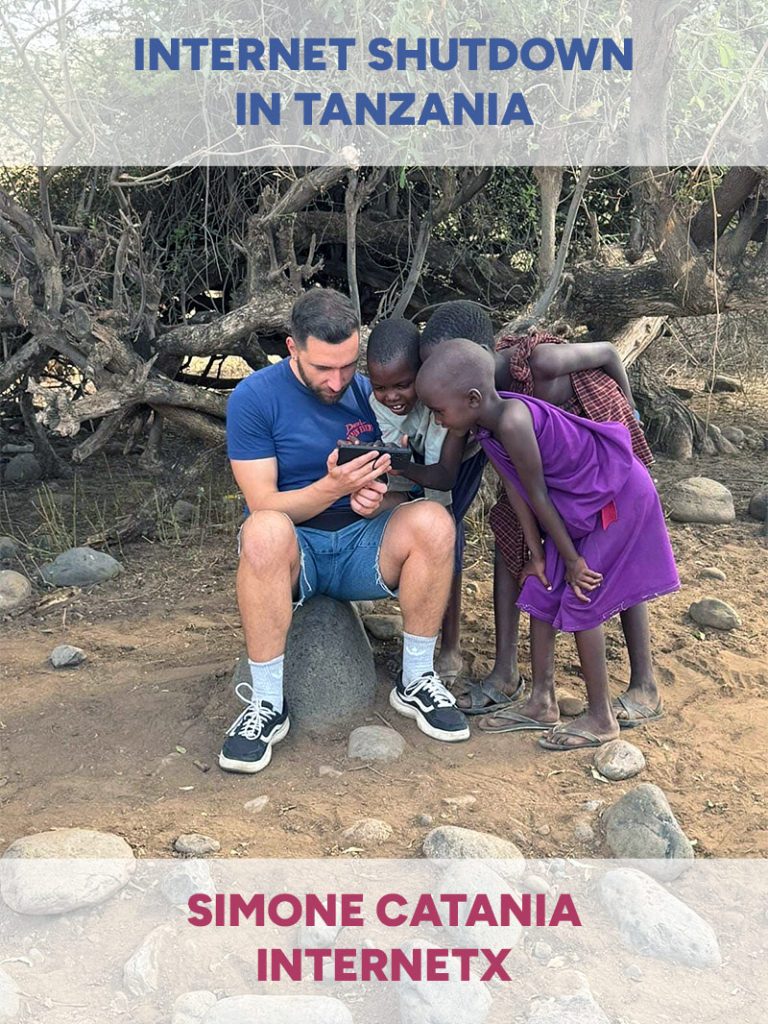
After the disputed October 29 elections, protests erupted across major cities, some turning deadly. Unofficial reports spoke of more than 800 people killed. In response, the government imposed a 6 p.m. curfew and ordered a blanket shutdown of the internet and mobile data networks. Overnight, streets emptied. Flights, ferries and road transport were disrupted. Businesses closed before dusk, and long lines formed at fuel stations and ATMs as digital payments stopped functioning altogether.
On October 31, the United Nations human rights office publicly urged Tanzania to restore access, emphasizing that the ability to communicate online is inseparable from the rights to free expression, peaceful assembly and association. But service did not return quickly and the blackout lasted five days and six hours, for a total of 126 hours without internet connectivity.
This was not an isolated incident.
Shutdowns are increasing worldwide, often framed as measures to maintain security or curb misinformation. In 2024 alone, digital rights organizations documented 296 shutdowns across 54 countries, with global economic losses estimated at 7.69 billion dollars for that year. The previous year saw losses even higher, reaching more than 9 billion dollars.
Human-rights groups, UN experts and the Internet Society consistently warn that shutdowns of this scale amount to collective punishment. They silence entire populations, hinder economic activity and sever people from essential services. When networks go dark, GDP drops, logistics freeze and businesses lose revenue instantly.
For InterNetX, Catania’s work focuses on education and advocacy for a stable, open internet and a secure global namespace.
The company’s mission includes strengthening digital identities and providing resilient DNS infrastructure for individuals and organizations worldwide. Yet his experience in Tanzania underscored a difficult truth: even the strongest technical foundations mean little when a single directive can disconnect millions from communication, opportunity, education and their own voice.
His time in Tanzania revealed more than natural landscapes and cultural beauty. It exposed the fragility of digital access in moments of political tension and reminded him how critical connectivity is, not just for commerce or convenience, but for the protection of fundamental rights. The internet must remain available in daily life and especially in times of crisis.
Thank you Simone, for sharing this educating and life-changing experience with us!
Copyright © 2025 DomainGang.com · All Rights Reserved.